

Driver Fatigue Monitoring System DMS Explained
- mobilevideosystem
- Jun 6
- 6 min read
A near-miss at 3:40 a.m. rarely looks dramatic in a spreadsheet. It shows up later as a hard brake event, a lane departure, a passenger complaint, or a claim file. For fleet operators, that is exactly why a driver fatigue monitoring system DMS matters. Fatigue risk builds quietly, but the operational consequences are immediate - collisions, injuries, equipment damage, missed service, and liability exposure.
For safety directors and operations leaders, fatigue is not just a driver wellness issue. It is a fleet performance issue. In ambulance transport, paratransit, transit, trucking, tour bus, and waste management fleets, drivers work long shifts, cover repetitive routes, and operate in conditions where attention can degrade before anyone recognizes the warning signs. A well-designed DMS helps close that gap by identifying behaviors linked to drowsiness and distraction in real time.
What a driver fatigue monitoring system DMS actually does
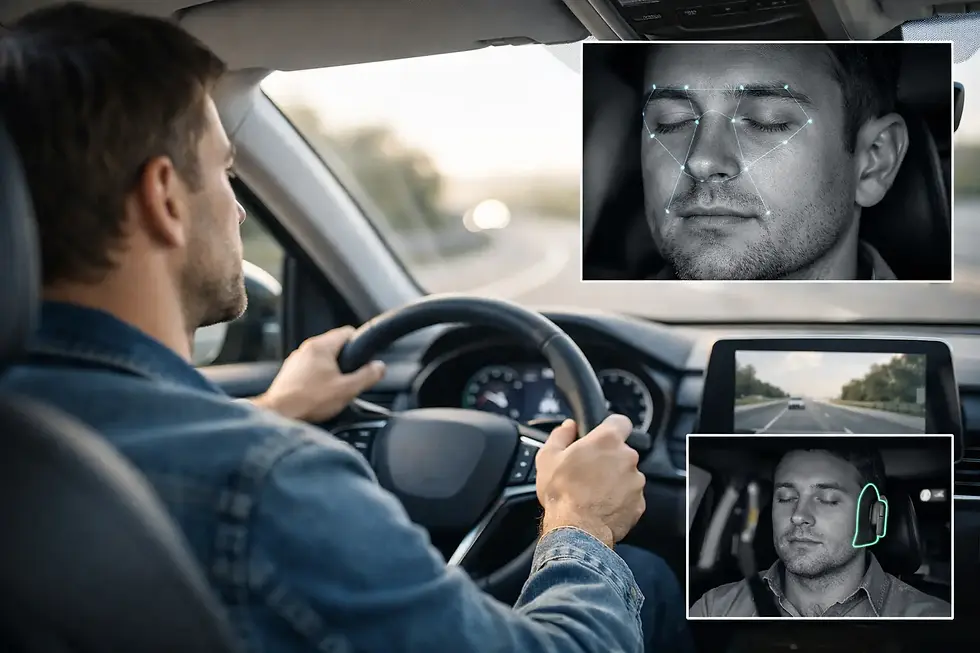
At its core, a DMS uses an inward-facing camera and AI analytics to monitor driver behavior inside the cab. The system looks for indicators such as prolonged eye closure, frequent blinking, head nodding, gaze diversion, phone use, and posture changes that suggest reduced alertness. When thresholds are met, it can issue an in-cab alert, record the event, and send data to fleet managers for follow-up.
That sounds straightforward, but the value is in the timing. Traditional supervision often catches fatigue after the outcome - after the crash, after the complaint, after the workers' compensation claim. A DMS is designed to intervene earlier, when a driver can still correct behavior or pull over safely.
This is also where many buyers need a clearer view. A fatigue monitoring system is not a lie detector, and it is not a substitute for scheduling discipline, training, or policy enforcement. It is one layer in a broader safety stack. The best results come when DMS is deployed alongside road-facing video, telematics, and ADAS so that driver condition and vehicle behavior are evaluated together.
Why fatigue detection matters in fleet operations
Fatigue is difficult to manage because it does not present the same way in every operation. Long-haul trucking may deal with overnight miles and monotonous road conditions. Paratransit and transit fleets often face split shifts, dense stop patterns, and constant passenger interaction. EMS and ambulance teams operate under stress, irregular schedules, and urgent response demands. In each case, the trigger for reduced alertness is different, but the safety risk is the same.
That is why a driver fatigue monitoring system DMS should be evaluated in operational context, not as a standalone gadget. The question is not simply whether the camera can detect closed eyes. The question is whether the system can support safer decisions across the realities of your fleet.
For example, an alert in a refuse vehicle on a short urban route may prompt coaching and event review. In a motorcoach or long-distance shuttle environment, the same alert may trigger dispatch escalation or route reassignment. In EMS, it may be used as part of a broader fatigue risk management process tied to shift structure and supervisor oversight.
How DMS works in real-world deployment
Most enterprise DMS platforms rely on computer vision models trained to identify facial and behavioral markers associated with drowsiness or inattention. The inward-facing camera continuously monitors the driver zone, even in low-light conditions, using infrared or comparable imaging support. The software then classifies events based on configurable rules.
When the system detects a fatigue-related behavior, the response can happen in stages. First, the driver receives an audible alert or voice prompt in the cab. If behavior continues or meets a higher risk threshold, the event is stored with video evidence and sent through the fleet platform for supervisor review. In more advanced environments, those events can be correlated with GPS position, speed, ADAS triggers, and telematics data.
That correlation matters. A brief glance away at a stoplight is not the same as prolonged inattention at highway speed. Head posture that looks concerning in isolation may not be a fatigue event if the vehicle is parked. A strong DMS solution reduces false positives by interpreting behavior with driving context, not just raw camera inputs.
What fleet buyers should look for
Not every DMS is built for mission-critical use. Consumer-grade products may demonstrate detection features, but fleet environments demand much more. Reliability across lighting conditions, driver profiles, cab layouts, vibration, and long operating hours is essential. So is the ability to integrate with your existing safety infrastructure.
The practical evaluation starts with alert quality. If the system generates too many questionable events, supervisors stop trusting it and drivers start tuning it out. If sensitivity is too low, the system misses the behaviors that matter. Calibration and rule-setting are not minor details. They are central to whether the deployment improves safety or creates noise.
Video evidence is equally important. A fatigue alert without associated footage has limited coaching value and weaker claim support. Fleets need event-based video that can be reviewed quickly, escalated when necessary, and retained within a broader incident management process.
Integration should also be on the checklist. DMS performs better as part of a connected video intelligence environment that includes road-facing cameras, telematics, cloud access, and, where appropriate, ADAS. When safety managers can see the inward event, the road scene, vehicle speed, and location together, they can respond with much more precision.
The trade-offs operators should expect
A DMS can improve visibility, but it also changes the conversation with drivers. Some resistance is normal, especially if the rollout is framed as surveillance for its own sake. The stronger approach is to position the technology around driver protection, incident reduction, and exoneration as well as accountability.
That message matters because there are trade-offs. A more sensitive system may catch earlier signs of fatigue, but it can also generate more alerts. A less sensitive configuration may be easier for drivers to accept, but it may miss lower-level warning signs. The right setting depends on route type, operating hours, incident history, and workforce culture.
Privacy concerns also need to be handled directly. In commercial fleet operations, inward-facing cameras serve legitimate safety and liability purposes, but policies should still be clear on what is recorded, who can review it, how long it is retained, and how it is used in coaching or disciplinary processes. Clarity protects the organization and reduces friction during adoption.
Where DMS delivers the most value
The return on a fatigue monitoring system is rarely limited to one metric. Collision prevention is the obvious goal, but fleets also gain stronger documentation, better coaching opportunities, and more consistent safety oversight across dispersed operations.
In higher-risk sectors, those gains compound quickly. Ambulance and EMS fleets can use DMS to support safer operations during extended and irregular shifts. Paratransit and transit agencies can address distraction and fatigue in passenger-facing environments where one lapse can put many people at risk. Trucking and motorcoach operations can strengthen long-haul oversight where supervisors cannot observe drivers directly. Waste management fleets can apply DMS within routes that combine repetitive tasks, early starts, and dense urban hazards.
This is where a full-service safety partner often makes the difference. Technology selection, camera placement, installation quality, event tuning, policy alignment, and post-install support all affect outcomes. Mobile Video Systems approaches these environments as integrated safety deployments, not one-off camera sales, which is the right model for fleets that need dependable performance and operational follow-through.
DMS works best when paired with policy and coaching
No monitoring technology can fix unsafe scheduling, weak supervision, or poor driver communication. DMS is most effective when the fleet has a defined process for reviewing events, identifying patterns, and acting on what the data shows.
That does not always mean discipline. In many fleets, the best early use case is coaching. A driver with repeated fatigue alerts may need route adjustments, break enforcement, or a direct conversation about off-duty rest habits. Another may reveal a scheduling problem that affects an entire shift group. The footage creates an objective basis for action.
Over time, that visibility helps organizations move from reactive incident response to active risk management. Instead of asking what caused the crash, they can ask which patterns appeared before it and how those patterns should be addressed now.
A driver fatigue monitoring system DMS is worth serious consideration when your operation cannot afford blind spots around alertness, distraction, and duty-of-care exposure. The right deployment protects drivers first, and that protection extends to passengers, vehicles, property, and the continuity of the operation itself.


Comments